
Fintech Explainers
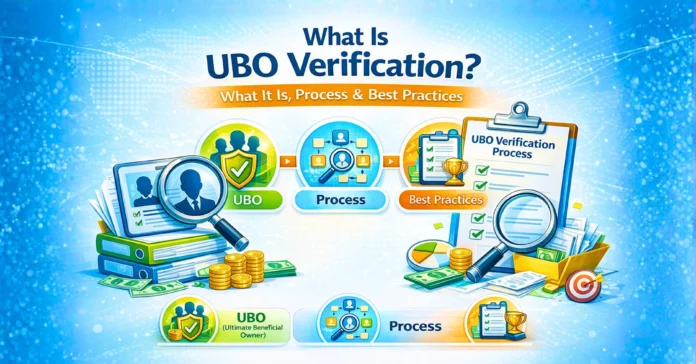
What Is UBO Verification? What It Is, Process & Best Practices
UBO verification—short for Ultimate Beneficial Owner verification—is a core financial crime compliance process used to identify, verify, and continuously monitor the real natural persons...

What Is Know Your Business (KYB)? Definition, Process & Compliance
Know Your Business (KYB) is a regulatory and risk-management process through which financial institutions verify, understand, and continuously monitor business customers by validating legal...
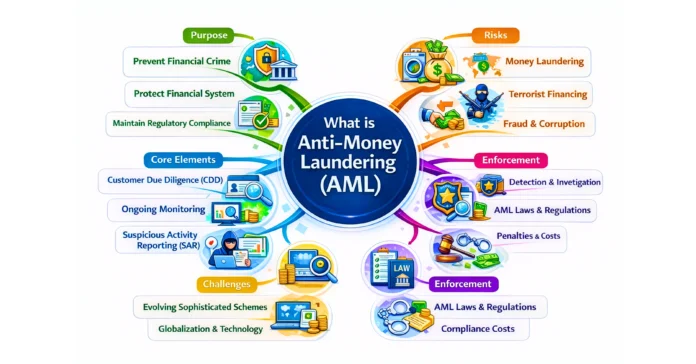
What Is Anti-Money Laundering (AML)? Definition, Process, Laws & Examples
One-sentence definition of Anti-Money Laundering (AML)
Anti-Money Laundering (AML) is the system-level legal, institutional, and operational framework designed to detect, prevent, disrupt, and report the...

What Is Know Your Customer (KYC)? Definition, Process & Risks
One-Sentence Definition
Know Your Customer (KYC) is a regulated set of identity verification, risk assessment, and ongoing monitoring processes that financial institutions use to establish,...



What is Financial Technology (Fintech)? Definition, How It Works, Examples, Future
What Financial Technology (Fintech) Means at Its Most Fundamental Level
Fintech, short for financial technology, refers to the application of software, data, networks, and computational...

What Is Atomic Settlement in Finance? Meaning, How It Works, Examples,...
What Atomic Settlement Means at the Most Fundamental Level of Finance
Atomic settlement is a settlement design principle in which all legs of a financial...
Tokenization vs Lemmatization Explained: Differences Use Cases Architecture Examples
Why Comparing Tokenization and Lemmatization Matters for Professionals Working Across Finance, AI, and Data Systems
Tokenization and lemmatization appear in two different worlds—tokenization in finance...
Tokenization vs Hashing Explained: Differences, Use Cases, Security and Compliance
Understanding Why Tokenization and Hashing Are Often Confused but Serve Fundamentally Different Purposes
Tokenization and hashing are frequently mentioned together in discussions around data security,...
Tokenization vs Securitization in Finance: Differences, Use Cases, Risks, and Future
What Tokenization Means in Modern Financial Systems
Tokenization in finance refers to the process of representing an existing financial asset, claim, or liability as a...
Tokenization vs Encryption in Finance Explained: Key Differences, Use Cases, Risks...
What Is Tokenization in Finance and Why Has It Become a Core Component of Modern Financial Infrastructure?
Tokenization in finance refers to the process of...